
GEO vs SEO Difference: Navigating Future Search
This blog explains how Generative Engine Optimization (GEO) differs from Search Engine Optimization (SEO), how both impact visibility, rankings, and content strategy, and what readers need to stay ahead.
Aicodepro Team
VERIFIED AUTHOR
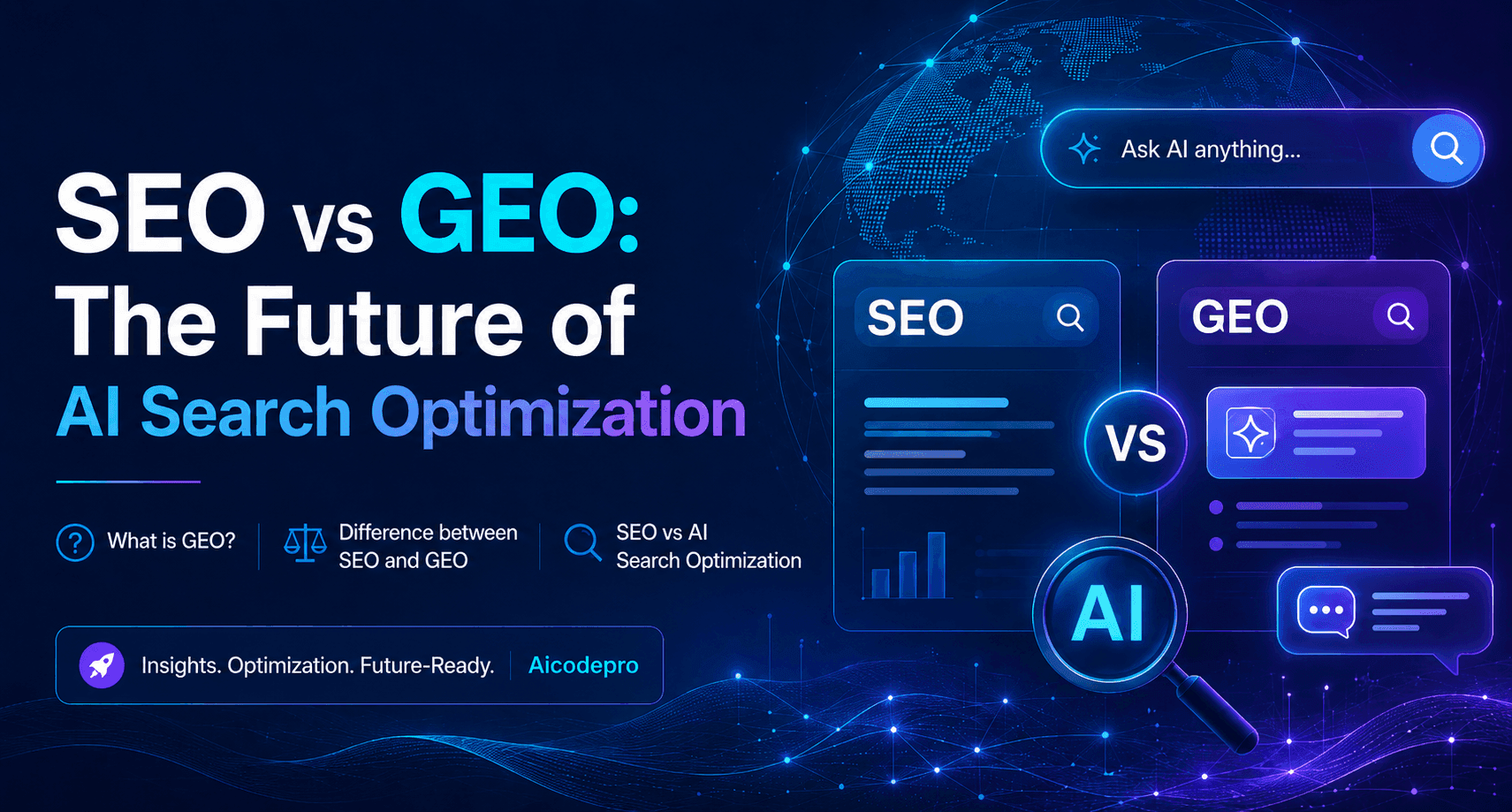
Let’s be honest: just when you’ve mastered one digital marketing trend, another shows up with a fancy acronym. You may have spent years getting cozy with SEO, but now you’re hearing about "GEO" and wondering if you need to switch gears or just brush up on the new vocabulary. If you’re curious about the GEO vs SEO difference and how it impacts your website’s visibility (and future), you’re in the right place.
Why Understanding GEO vs SEO Difference Matters
Remember when search engines simply listed blue links and your goal was to be on page one? Today, if you search for a recipe, a quick answer, or a tutorial, you might notice answers appearing above traditional results sometimes, you don’t even need to click a website to get your answer. This shift changes the game not only for users but for creators, marketers, and business owners too.
Understanding the difference between SEO and GEO is no longer just “something nice to know”; it’s essential. Whether you’re blogging, running a web store, or managing online content for clients, staying ahead helps maintain your visibility, adapt strategies, and stay connected with your audience. Think of your favorite content that suddenly stopped showing up chances are, how search engines display information changed. Don’t let your hard work vanish with outdated practices.
SEO vs GEO: Quick Definitions
Let’s break it down before we get technical:
SEO (Search Engine Optimization): The classic craft of tweaking your site, content, and keywords to appeal to search engines like Google, Bing, or DuckDuckGo. The aim? Show up higher in organic search results and earn clicks.
GEO (Generative Engine Optimization): The new kid on the block. Here, you optimize content to show up within answers generated by AI-driven engines (think ChatGPT, Gemini, or Bing’s AI-powered search). Instead of just ranking for a blue link, you aim to be referenced or featured in AI summaries and direct responses.
If you’re wondering what is GEO or whether SEO still matters, keep reading the lines are crossing, and your strategy might need a tune-up!
Main Differences: GEO vs SEO
While SEO and GEO both aim to get content discovered, they go about it differently. Here’s where their paths diverge:
User Journey: SEO typically drives people to your website. GEO, meanwhile, might present your information as part of an AI-powered answer, possibly without the user ever visiting your page directly.
Optimization Targets: SEO plays by search engine algorithms title tags, meta descriptions, backlinks, and on-page content. GEO focuses on how well AI systems can “understand” and use your information contextually.
Content Structure: SEO values structure and clarity, but GEO rewards content that’s unambiguous, fact-based, and easy for AI systems (like Google’s SGE or Bing AI) to interpret and reference in real-time answers.
What Is GEO? Why Is It Getting Attention?
GEO stands for Generative Engine Optimization and it’s gathering buzz because of how AI tools (such as chatbots and voice assistants) have changed content discovery. Instead of hunting for answers on ten blue links, users might ask Alexa, ChatGPT, or Google’s Search Generative Experience (SGE) and get direct, detailed responses. In many cases, these AI answers borrow from and cite web content and if your content isn’t “AI-friendly,” you might be left out.
Sites like Aicodepro now track how often your content is used in generative answers, which means GEO is getting measurable. It’s about being the informational source that an AI turns to first, not just impressing a search engine bot.
How GEO and SEO Work Together
If you’re already investing in SEO, don’t panic many SEO best practices still apply. However, with AI search optimization stepping into the spotlight, focusing solely on traditional SEO may not cut it. Here’s where the difference between SEO and GEO really stands out:
While SEO gets you into search engine listings, GEO puts you in front of users via AI-generated answers.
SEO is about relevance, GEO is about being reference-worthy in real-time, context-rich environments.
Think about the future of SEO and GEO as increasingly interconnected — with users moving fluidly between web results and AI-powered responses.
Practical Tips: Optimizing for Both
Ready to be visible everywhere? Here’s what you can do:
Be Specific and Clear: Write content that leaves little room for misinterpretation, which helps AI “quote” you accurately.
Fact-Check and Cite: Use trustworthy data and cite reputable sources. AI models love reliable facts — and so do users.
Structured Content: Clean headings, bullet points, and schema markup make your site accessible for both traditional indexing and AI results.
The SEO vs AI Search Optimization Debate
This debate is only getting bigger. Many argue that AI search optimization (and GEO) will eventually eclipse traditional SEO. But today, they complement each other. GEO optimization often rewards content that’s factual, updated, and precise while SEO still values authority and strong site architecture. The safest bet? Do both. Make your site easy to crawl and your answers ready to cite.
Future of SEO and GEO: Should You Change Your Strategy?
Here’s the reality: the digital world won’t slow down, and neither will changes in how search engines and AI interact with your content. Platforms like Aicodepro and others are already helping brands measure their performance in the generative search space. The best content creators keep learning, prioritize user-centric value, and adapt fast staying curious as tools evolve.
If you’re feeling overwhelmed, just remember: you don’t have to master everything overnight. Consider these as opportunities to future-proof your content and stay top of mind (and search results) for your audience.
What to Look for Before You Update Your Approach
Track how your content surfaces both in search rankings and in AI-generated responses.
Stay informed with tools and platforms that measure GEO (like Aicodepro), especially if your website is central to your business.
Conclusion: Embrace Both for a Brighter Digital Future
So, what’s the real GEO vs SEO difference? In a nutshell: SEO gets you seen by traditional search engines and drives traffic; GEO powers your content to be part of smarter, AI-generated answers. They’re both crucial as search technology evolves, and the savviest brands prepare for both.
If you want to stay ahead, keep your content trustworthy, specific, and user-focused for both the algorithms of today and the AI engines of tomorrow. Want practical tips tailored to your site? Stay curious, experiment, and be ready to evolve.
Ready to update your strategy? Start small, watch the impact, and let your content shine on every platform users (and AI) explore next.
Share with AI
Summarize this article, answer my questions based on it, and help me understand the key insights with your favorite AI assistant.