Is Your Website Ready for AI Search? Google AI Mode, GEO & SEO Changes Explained
Search in 2026 has fundamentally changed. Google AI Mode is live and handling commercial queries. OpenAI processes purchases inside ChatGPT. Shopify gave every store an agents.md file. AI-referred sessions grew 527% in early 2026.
Devendra Kumar Yadav
VERIFIED AUTHOR
What Actually Changed in 2026 - The Updates That Matter
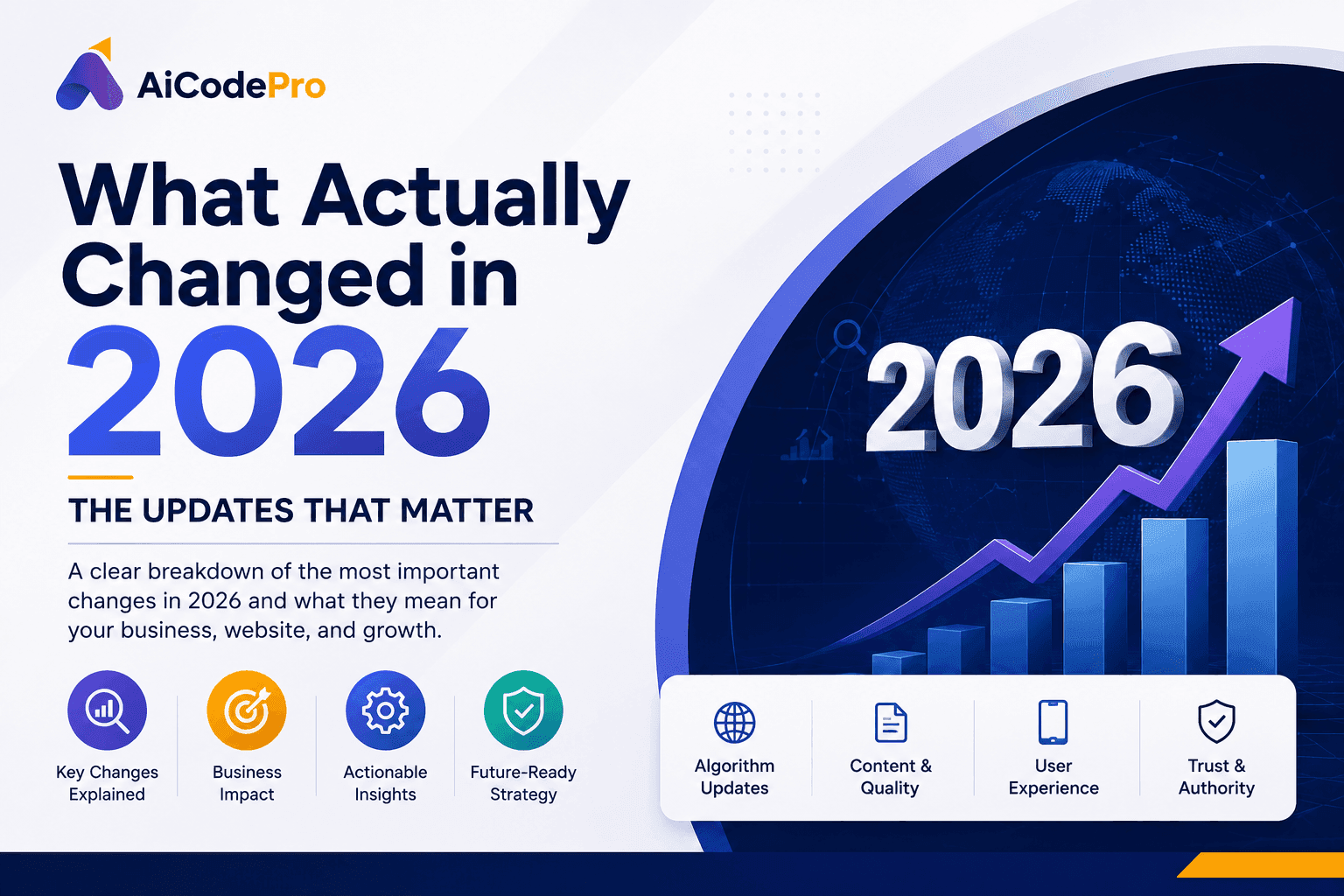
Three major platforms dropped significant updates within weeks of each other. Here is what each one means for your website.
1. Google Launched AI Mode
Google AI Mode is no longer experimental. It now handles commercial, transactional and navigational queries — not just informational ones. According to Ahrefs, when an AI Overview is present, the top-ranking page sees a 58% lower average CTR. Ranking #1 no longer means winning clicks. Source: Google Search Central — AI Features
2. Google's Universal Commerce Protocol (UCP) Is Live
Google documented the Universal Commerce Protocol as an open standard that lets AI agents turn product discovery directly into sales — without the user manually navigating your site. This is the biggest structural shift in ecommerce SEO since schema markup was introduced. Source
3. AI Discovery Files Are Now Important for Websites
In 2026, AI-readable files like /llms.txt, /llms-full.txt and /agents.md became important for AI search visibility. These files help AI systems understand your website, key pages, canonical URLs and available actions.
This is not only for Shopify. AiCodePro can add and optimise these files during development for custom websites, ecommerce stores, SaaS platforms and service websites — making your site easier for AI assistants and search engines to crawl, understand and recommend.
4. OpenAI Launched "Buy It in ChatGPT" — Instant Checkout
OpenAI released instant checkout inside ChatGPT using the Agentic Commerce Protocol. AI agents can now compare products and complete purchases on behalf of users. If your product data, pricing, availability and return policy are not machine-readable, your store will not make the shortlist. Source: OpenAI — Buy It in ChatGPT
🔍 Discover Your AI Visibility Score → Check Your AI Visibility Now
The Numbers That Should Concern Every Business Owner
Stat | Source |
58.5% of US Google searches ended without a click in 2024 | SparkToro / Datos |
59.7% of EU Google searches ended without a click in 2024 | SparkToro / Datos |
58% lower average CTR for the top result when an AI Overview is present | Ahrefs 2026 |
527% growth in AI/LLM-referred sessions in Jan–May 2026 | Previsible / Search Engine Land |
The interpretation from AiCodePro's research is clear: rankings remain useful, but they must now be paired with AI visibility, citation tracking and agent readiness. Traditional rank-only reporting does not explain traffic behaviour in 2026.
What Your Website Must Do Right Now
Make Your Site Crawlable and Understandable
Google's AI features follow the same foundational rules as classic search. According to Google Search Central's structured data guidelines, pages must not be blocked and schema must match visible page content. A clean sitemap, correct canonicals, indexed pages and server-rendered critical text remain non-negotiable.
Add Structured Data — JSON-LD First
Every priority page needs accurate JSON-LD. Use Organization schema on your homepage, Product/Offer/AggregateRating on product pages, Service and FAQPage on service pages, and Article and HowTo on blog content. Validate everything with Google's Rich Results Test. Mismatched or spammy schema can reduce trust — not improve it.
Set Up agents.md and llms.txt
For Shopify stores, review and customise your /agents.md, /llms.txt and /llms-full.txt files now that Shopify has made them available. For custom websites, create a concise /llms.txt pointing to canonical product, service, policy and contact URLs. These files tell AI agents what your site offers and where to find it. Do not keyword-stuff them — they must be accurate and honest.
Write Content That AI Systems Can Cite
Open each important page with a 40–60 word direct answer block explaining what the page is for, who it serves, and what problem it solves. Use question-led H2/H3 headings that match real buyer queries. Add comparison tables, FAQs, pricing factors and use-case blocks. Keep all critical information in HTML text — not locked inside images or JavaScript-only components.
Build External Trust and Authority
AI systems cite brands that are verified externally. Build reviews on third-party platforms. Publish case studies with measurable outcomes. Earn mentions from industry publications, directories and partner pages. Keep your brand name, NAP details, product names and claims consistent across every platform.
How to Measure Search Performance in 2026
AiCodePro recommends a three-layer measurement stack. Classic SEO reporting alone will not explain traffic behaviour when AI Overviews, AI Mode and agent-led discovery are active.
Layer | Metrics | Frequency |
Classic SEO | Rankings, CTR, organic sessions, conversions | Weekly / Monthly |
AI Visibility / GEO | AI citations, answer inclusion, brand mention share, sentiment | Monthly |
Agent Readiness | Schema health, feed accuracy, agents.md status, policy clarity | Monthly / Quarterly |
Add traffic segments for ChatGPT, Perplexity, Gemini, Claude and Copilot referrals to your analytics immediately. AI traffic is still smaller than Google for most brands — but at 527% YoY growth, it is a channel you cannot afford to ignore.
Your 30-Day Action Plan
• Confirm sitemap, robots.txt, canonical tags and Core Web Vitals for all priority pages
• Implement or validate Organization, Product/Service, FAQ and Breadcrumb JSON-LD schema
• Add direct answer blocks and FAQ sections to your top revenue pages
• Set up or customise agents.md and llms.txt with accurate URLs, categories and policies
• Create referral tracking segments for ChatGPT, Perplexity, Gemini, Claude and Copilot
• Run 20–50 AI visibility test prompts for your brand and key competitors
• Identify missing external reviews, case studies and third-party citations
• Assign a governance owner for product data, pricing, policies and compliance claims
Important: No public platform guarantees AI citations or rankings from a single change. Structured data and llms.txt improve clarity and eligibility — they do not force ChatGPT or Google to cite your brand. The strongest strategy is to make every important business fact easy to crawl, easy to understand, easy to verify and easy to act on.
Take the Next Step
AiCodePro has prepared a full SEO, GEO and AI Search educational guide covering every update in this article — with structured data templates, agents.md starter files, JSON-LD examples and a complete 30/60/90-day implementation roadmap.
📄 Download the Full 2026 SEO, GEO & AI Search Guide → Download the Free Guide
What is Google's Universal Commerce Protocol (UCP)?
UCP is an open standard documented by Google that allows AI agents to turn product discovery directly into a completed purchase — without the user manually navigating a website. It requires machine-readable product feeds, pricing, availability and shipping data.
Does adding llms.txt guarantee I will rank in AI answers?
No. No public platform guarantees AI citations based on any single file or schema change. llms.txt improve your eligibility and clarity for AI systems — but accurate, structured, trustworthy content is what earns citations.
Final Word from AiCodePro
The strongest SEO and GEO strategy in 2026 is not to chase every new AI file or trend. It is to make every important business fact easy to crawl, easy to understand, easy to verify, easy to cite and easy to act on. That protects your existing SEO value while preparing your website for AI-driven search and agentic commerce.